Inefficient inventory management and inadequate customer support due to delayed data response times pose significant challenges in sales management. Companies often react too late to changes in sales, leading to inefficient stock management and inconsistent customer experiences. This can also result in poorly aligned marketing and promotional strategies, particularly in high-value sales locations where campaigns might be launched even after the sales limit has been reached. This creates a risk of not achieving the desired Return on Investment (ROI). The problem is further compounded by a fragmented overview that makes it difficult to contextualist and benchmark data.
Why we’re better
The shopeyeQ Real-Time Precision Area Performance Monitoring workflow automation is triggered in real-time when there are changes in sales figures, allowing for prompt and targeted responses.
Benefits
Empower Your Retail Success
Discover how our platform's advanced features—like dynamic clustering algorithms, real-time insights, and predictive analytics—empower you to drive smarter growth.
Unemployment rate, inflation (provided by seQ technology)
Sociodemographic Data
Purchasing power index by postcode, age in the region (provided by seQ technology).
Step-by-Step Process
Map the customer journey
You provide us with your data, which we cluster in the background. We identify lookalikes for you and perform value-based segmentation.
1- Initial Data Collection
Nielsen ID: The user provides their Nielsen ID.
Data Review: We check if the correct data, such as Historic Sales Performance Data, is available or needs to be acquired.
Data Provision: The data is provided to the customer’s cloud (S3, Azure, Snowflake, etc.).
2- Data Analysis
We compare the sales figures weekly and benchmark them against pre-agreed reference ranges. For instance, if sales drop by 5% compared to the previous week, the seQ Automation Workflow is triggered.
3- seQ Workflow Activation
Portfolio Analysis: First, we check if the affected product is part of the core portfolio.
Cluster Analysis: Next, we analyse which cluster the product belongs to. You can select clusters that you always want to monitor.
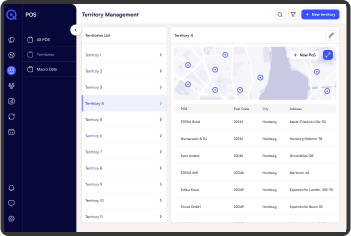
Territory Management: If the change occurs in, for example, Cluster 4, we check who in the relevant territory needs to be informed.
4- Actions
Automated Notification: Based on the defined workflows, the seQ technology responds accordingly. We tailor these workflows to your specific needs. For instance, the responsible field employee or regional manager is automatically notified if there is a percentage change in sales. These workflows can also be carried over from Use Case 2.
Targeted Actions: Based on these notifications, targeted actions can be taken to optimise sales strategies and prevent revenue loss.
Additional information
Explore Similar Solutions
Optimised inventory management and better support for retail outlets in field service areas are critical for success in the FMCG sector. However, brands often respond too late to changes in sales, leading to inefficient stock management and inconsistent customer experiences. This can result in poorly aligned marketing and promotional strategies, especially in high-value sales locations where campaigns may be launched despite sales limits already being reached. This creates the risk that invested money does not achieve the best possible ROI. Furthermore, a fragmented overview makes it difficult to contextualise and benchmark product data.
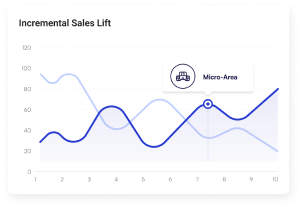
The seQ Real-Time Precision Area Performance Monitoring addresses this problem: We continuously monitor the sales data of your products at each point of sale. These sales figures are compared weekly to quickly identify deviations and trends.
By using our workflow automation, changes in sales figures trigger immediate responses in real time. For example, if sales drop by 5% compared to the previous week, this activates the seQ Automation Workflow. Depending on the defined workflows, the responsible field employee or regional manager is automatically notified. These workflows can also be adapted from previous use cases. Based on these notifications, targeted actions can be taken in real time to optimise sales strategies and prevent revenue loss.
Case Study
Optimizing Retail Insights
This section presents a series of case studies that demonstrate the transformative impact of POS clustering on retail operations.